Medieval Chastity Belts Were Nineteenth-Century Fakes
THE MOVIE VERSION
Popular historical fiction depicts crusading knights locking wives into padlocked iron belts before marching to the Holy Land to preserve marital fidelity.
THE RECORD
REF #013Medieval medical and legal archives contain zero references to chastity belts, while museum metallography proves surviving specimens are 19th-century fabrications.
Few legends about the Middle Ages have proved as persistent as the iron chastity belt. In popular folklore, historical novels, and cinema, crusader knights routinely lock wives into rigid iron contraptions before marching eastward to Jerusalem, pocketing the single key to guarantee marital fidelity during years of military absence. Major European museums, including the British Museum and the Germanisches Nationalmuseum in Nuremberg, displayed authentic specimens for over a century, presenting them as physical proof of medieval marital paranoia. Yet rigorous metallurgical testing and modern archival research have dismantled the entire narrative. Medieval knights never locked their wives in iron belts. Every physical specimen preserved in museum collections is an eighteenth or nineteenth-century fabrication, created during the Victorian era to satisfy morbid curiosity and reinforce prejudices about medieval barbarism.
The Claim
The standard historical myth claims that iron chastity belts were introduced into Western Europe during the twelfth century by returning crusaders who supposedly borrowed the concept from eastern harems. Husbands allegedly fastened these articulated iron hoops around a woman’s hips, securing them with padlocks to prevent sexual intercourse.
This narrative gained widespread credibility because it mirrored Victorian assumptions regarding the Dark Ages. Nineteenth-century historians loved to depict medieval society as primitive, superstitious, and obsessively cruel. Just as Victorian antiquarians fabricated the spiked iron maiden to generate lucrative museum ticket sales, as detailed in our investigation of the Nuremberg iron maiden hoax, romantic writers enthusiastically embraced the chastity belt as factual historical reality.
Yet when medievalists searched genuine period records, the claim evaporated. Across thousands of surviving medieval legal codes, ecclesiastical court rolls, confessional manuals, and hospital records from England, France, Germany, and Italy, there is not a single mention of a physical chastity belt being manufactured, worn, or litigated. In an era where canon law scrutinized sexual misconduct with obsessive detail, a device designed to enforce marital chastity would have produced hundreds of theological and legal disputes. Instead, the historical record is completely silent.
The Mechanism
The biological impossibility of wearing a locked iron garment highlights why the device was never a historical reality:
First, human skin cannot tolerate continuous friction against unpadded, unyielding metal. An iron band clamped tightly around the pelvis, thighs, and perineum produces severe contact dermatitis, pressure sores, and cutaneous ulceration within days. In pre-antibiotic Europe, where wound infections frequently turned fatal, wearing a rigid iron girdle would cause pelvic cellulitis, systemic sepsis, and death within weeks.
Second, human sanitation makes the design unworkable. Even if an iron belt featured narrow apertures for bodily waste, keeping the underlying skin clean and free of excoriation without removing the metal band is impossible. Urine and fecal matter coming into constant contact with raw, chafed skin and corroding iron would create lethal gangrene.
The mechanical reality of medieval metallurgy was sophisticated. Armorers who forged articulated plate armor for mounted combat understood human physiology intimately, tailoring tempered steel plates with rolling pivots and leather straps to allow knights to sprint and vault onto saddles, as analyzed in our study of medieval knight agility. A guild of professional armorers capable of crafting articulating harness would never design an unwearable torture instrument that killed the wearer within a month.
The Evidence
The origin of the physical chastity belt can be traced precisely to a single satirical manuscript and a nineteenth-century market for erotic antiquities:
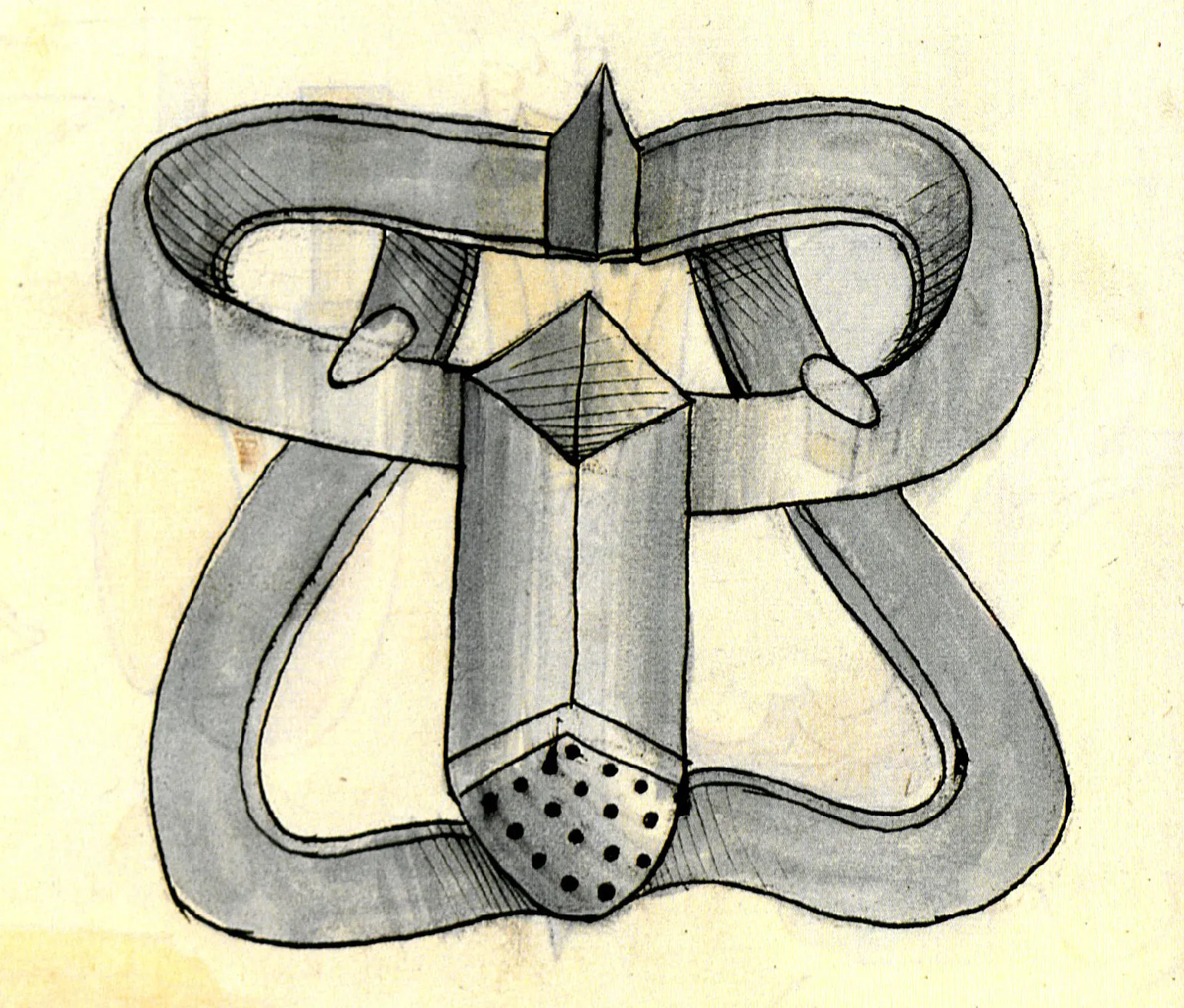
The earliest known illustration of a chastity belt appears in Bellifortis, a military technology treatise completed in 1405 by the German engineer Konrad Kyeser. The treatise is famous for technical drawings of siege engines, catapults, and pontoon bridges. However, Kyeser concluded his work with a series of humorous sketches, including magical recipes for invisibility, catapults firing chamber pots, and a drawing of an iron belt with the following Latin inscription:
SOURCE: Konrad Kyeser, Bellifortis (1405), Clm 30150, fol. 82v
“Florentinarum hoc bracile dominarium, ferreum et durum, ab antea sic reseratum.” (“This is an iron, hard belt of the Florentine women, which is opened from the front.”) Konrad Kyeser, Bellifortis, fol. 82v (Bayerische Staatsbibliothek)
Scholars, including medievalist Albrecht Classen in his landmark study The Medieval Chastity Belt: A Myth-Making Process, have confirmed that Kyeser’s drawing was an allegorical satire mocking Florentine marital jealousy, never a real engineering blueprint. For the next three centuries, chastity belts existed solely in Renaissance bawdy poetry, satirical woodcuts, and theatrical farces where gullible old husbands were cuckolded despite foolish padlocks.
The physical belts in museum showcases only appeared during the nineteenth century. Antiques dealers recognized that wealthy Victorian collectors paid enormous prices for sensational artifacts illustrating medieval cruelty. Workshop craftsmen in France, Germany, and England began forging faux medieval belts using scraps of scrap iron, applying acid washes, file marks, and artificial rust to simulate centuries of burial.
Curatorial skepticism culminated in the 1990s. In 1996, the British Museum removed its famous chastity belt, catalog number 1845,1223.1, from public galleries. Department of Medieval Antiquities curator James Robinson ordered metallurgical testing on the iron. The analysis revealed modern steel composition, nineteenth-century rolled sheet metal, and cutting marks left by industrial metal shears unavailable before the industrial revolution.
Shortly thereafter, the Germanisches Nationalmuseum in Nuremberg withdrew its specimen, acknowledging that metal and rivet testing confirmed nineteenth-century construction. The Musee de Cluny in Paris followed suit, reclassifying its belt as a romantic curiosity.
The Human Turn
The myth of the medieval chastity belt reveals far more about the modern imagination than it does about medieval life. Victorian society, preoccupied with moral propriety and technological progress, comforted itself by portraying medieval forebears as brutal barbarians who subjugated women with blacksmith tools.
In reality, medieval marriage was governed by social, financial, and religious contracts. Noblewomen managing estates while husbands were away on crusade wielded substantial legal and economic authority. They collected rents, organized manor defenses, negotiated family alliances, and oversaw agricultural production. The notion that a medieval lord would reduce his business partner and mother of his dynastic heirs to an infected prisoner in an iron cage is an absurd projection of Victorian melodrama.
By examining genuine material culture rather than manufactured curiosities, historians restore dignity to medieval historical reality. Medieval people were neither saints nor cartoon monsters. They resolved marital fidelity through social customs, community pressures, and the confessional, not with mechanical hardware.
The Artifact
The primary physical specimen embodying this historiographical shift is the iron girdle preserved in the reserve collection of the British Museum under registration number 1845,1223.1.
Acquired in December 1845, the belt consists of an iron hoop lined with deteriorated velvet, fitted with hinged side-plates and an intricate padlock aperture. For decades it served as a star attraction for tourists seeking Gothic horrors. Microscopic examination of the rivets, hinge joints, and tool marks showed no trace of medieval forge techniques. The sheet iron had been cold-rolled using nineteenth-century rolling mills, and the decorative serrations along the waistband were cut using standard modern metal punches.
Today, the artifact remains in the museum stores as a teaching monument to Victorian antiquarian forgery. It does not speak of medieval crusaders departing for Acre. It speaks of nineteenth-century con artists who understood human gullibility and knew that an audience eager to believe in ancient cruelty would gladly pay for fabricated iron.
Primary Sources & Archaeological References
- [01]
- [02]
- [03]
- [04]
Related Dossiers
Medieval People Did Not Die at Thirty: The Life Expectancy Fallacy
Pop culture claims medieval people died of old age at thirty. Cemeteries and records prove adults routinely lived well into their sixties and seventies.
Medieval People Did Not Believe the Earth Was Flat: The 1828 Hoax
Every medieval scholar knew the Earth was spherical. The myth that Columbus had to convince skeptics the world was round was invented by Washington Irving.
Medieval People Did Not Drink Beer Instead of Dirty Water
Medieval Europeans did not avoid water out of fear of poison. Medical manuscripts and civic pipe records prove clean water was prized and drunk daily.